CPAs Have a Knowing Problem: Why Curiosity Is the Future of Fractional CFO and Advisory Work

I'm onboarding a new Fractional CFO into The CFO Collaborative, someone I'm genuinely excited about. Sharp, experienced, exactly the kind of professional we want serving clients under the MACKEY brand.
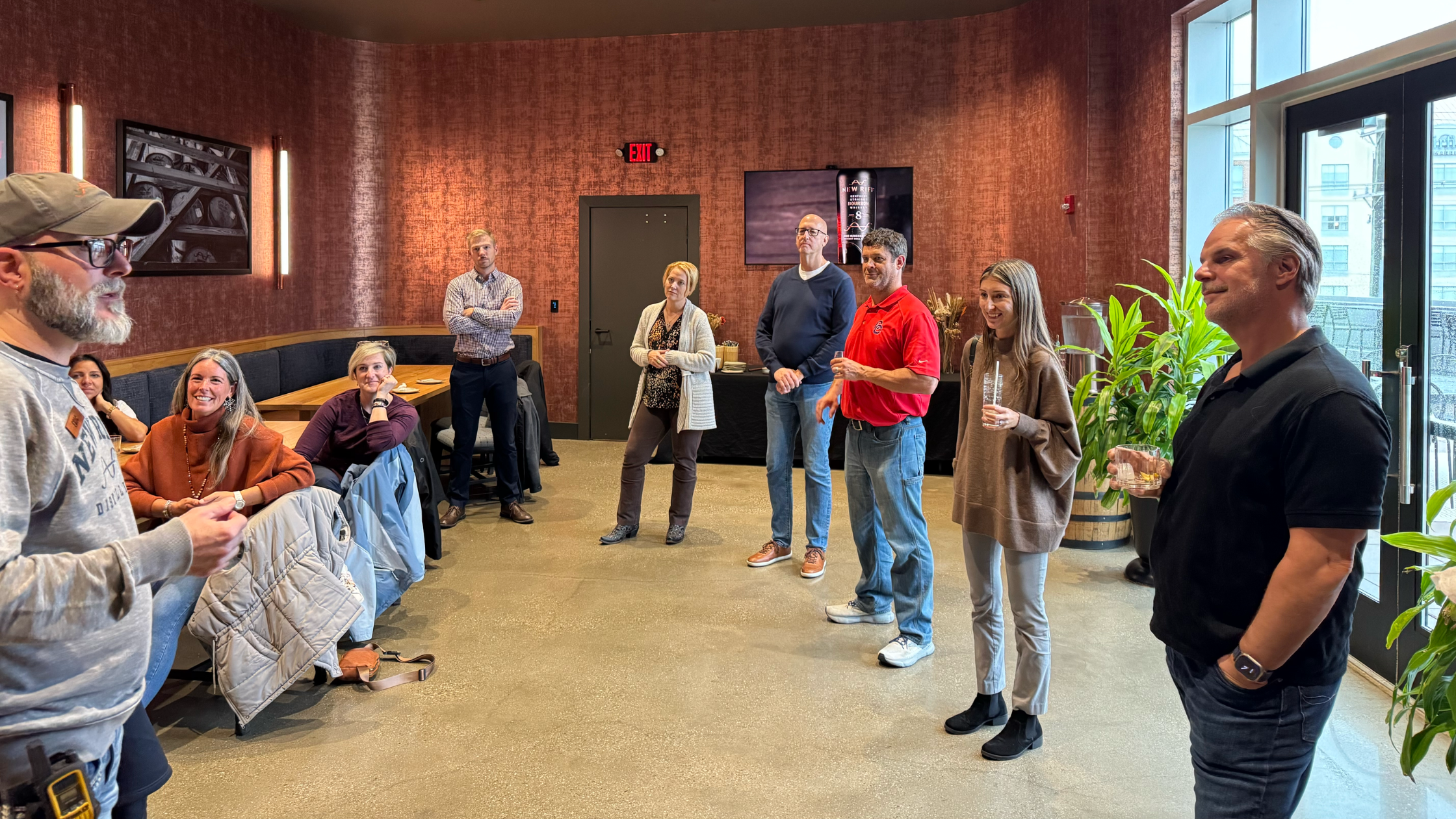
We have our first real client engagement coming up: a Grow Four Ways workshop. For those unfamiliar, it's a facilitated session where we harvest the growth ideas already living inside the client's team. Ideation, possibility, strategy, all coming from the people who know the business from the inside.
I sent her the client information to prepare.
She sent back two pages of questions.
Is there an organizational chart? Do they have an HR manual? Are there written job descriptions? Is the growth strategy they mentioned when they came to us still valid? What's their tech stack?
And more. Much more.
I sat with that email for a moment. These are great questions. I felt the urge to know rise up in my CPA bones. This is what CPAs are trained to do: to know, to find the answer. But I have learned to resist that urge.
On our call to prep for the workshop, we talked about why we don't need those answers. Not yet. Possibly not ever, at least not before this workshop.
Because here's what I know about a brainstorming session: knowing shuts it down.
CPAs, We Have a Knowing Problem
We are trained (rigorously, repeatedly, professionally) to gather all available information before we speak. To have the data. To understand the full picture. To never be caught without an answer.
That discipline is exactly right for a lot of what we do. The financial facts matter. The historical numbers matter. Accuracy is non-negotiable.
But there is a category of our work, and it is the highest-value category, where knowing too much is not an asset. It's a barrier.
Walk into a Grow Four Ways workshop with two pages of pre-formed questions and you've already decided what's important. You've organized the room around your framework before anyone has spoken. The team senses it and the ideas that don't fit your mental model quietly go unspoken.
What we lose in that moment isn't just creativity. We lose access to the actual thinking of the people closest to the business. The person in accounts receivable who has watched the same bottleneck repeat for three years and never been asked about it. The project manager who has a theory about why the best clients don't come back. The owner herself, who has an instinct she's never had permission to say out loud.
Knowing, deployed too early, closes those doors before they open.
And it doesn't stop at brainstorming. Even after a Grow Four Ways workshop, our certainty can work against us. Because when we think we already understand, we stop asking. And the question we don't ask is often the one that would have changed everything.
The Future of Fractional CFO and Advisory Work
As I prepare for my presentation at the AICPA's Engage conference, where I'll be exploring neuroscience, AI, and what the future of this profession actually looks like, I find myself returning to this idea again and again.
Clients, like all of us, operate day to day from our current mindsets. Built moment by moment as we grow up, built for efficiency to save energy, they become the autopilots we run on.
It naturally follows that the results we create day by day come from our current mindsets, our current autopilots. That's not a criticism. That's just how it works. Decisions, strategies, structures for the business, all of it makes complete sense given our current mindset.
To create new results, we first have to question our current mindsets. Only as we separate ourselves from our autopilot can we question our thinking and begin constructing something new.
As a Fractional CFO, your most valuable role is to support clients in questioning their mindsets by asking the right questions. Questions for which their automatic mindset does not have a ready answer.
Why Curiosity Creates Better Client Transformation
The research on this is unambiguous, and it comes not from the accounting world but from behavioral psychology.
Psychologist Stephen Rollnick, co-founder of Motivational Interviewing, one of the most rigorously studied behavior-change frameworks in existence, put it plainly: “The more you try to insert information and advice into others, the more they tend to back off and resist. Put simply, this involves coming alongside the person and helping them to say why and how they might change for themselves.”
Read that again. The more we push our knowing onto clients, the more they pull away. The advice we're so proud of delivering is often the very thing that closes the door.
The corollary is equally powerful: people are far more likely to act on conclusions they reach themselves. When a client arrives at their own insight, through their own words, their own reflection, their own discovery, they own it in a way they never will with a delivered recommendation. The idea carries a weight no outside advice can match.
This isn't a soft observation. It's one of the most consistent findings across psychology, behavioral medicine, and organizational research. And it has everything to do with how we show up in the room.
Curiosity: The New Value Proposition for CPAs and CFOs
New insights, dramatic gains, and forward progress do not come from our CPA knowing. They come from our deep curiosity. It's curiosity that leads to awareness. It's curiosity that opens the space where a new decision becomes possible. It's curiosity that takes a client (and a CFO) somewhere they genuinely couldn't have gotten to alone.
Most of our clients don't know they have a mindset getting in their way. They've never thought of it that way. They're just running the business the way they've always run it, wondering why the results aren't changing.
That's precisely why our not-knowing is so powerful. When we arrive without a predetermined map, we ask different questions. And those questions, the ones born from genuine curiosity rather than confirmation of what we already think, are the ones that crack something open.
It is the difference between giving a client an answer and helping them see the path to their own.
From Compliance Work to Strategic CFO Leadership
The new CFO I'm onboarding is talented and will be exceptional at this work. And she's learning, as we all have to learn, that the discipline we built our careers on has to be held differently in this role. The facts are still essential. Bring the facts.
But hold the interpretations. Hold the benchmarks. Hold the two pages of questions, until you've sat in the room, listened, and let the most important question of the day arise in you from that listening.
Because the most important question you'll ever ask a client is the one you had no idea you were going to ask. And you can only get there by staying curious long enough to find it.
Curiosity: your new value proposition.
A Question for CPAs, CFOs, and Financial Advisors
Where in your current client work are you arriving with answers before you've asked the questions?
That might be exactly where the breakthrough is hiding.
With love from RedSunflower Farm,
-Mackey
Hi, I’m Mackey McNeill, CPA, PFS, and founder of The CFO Collaborative. I help CPAs move from compliance to coaching and build practices and lives they love. If you’re ready to step into more strategic, meaningful work with your clients, I’d love to connect.
Schedule a call here to learn more. Our next cohort begins May 18th.
Additional Links:
Join The CFO Collaborative email list and learn the CFO framework I used to scale my CFO Firm, MACKEY.
📚 Read More: